AI Self-Care Checklist: Mood Clarity & Daily Wellness

AI-Supported Self-Care Checklist for Mood Clarity and Daily Mental Wellness
Daily wellbeing habits are easier to sustain when they are simple, measurable, and flexible. An AI-supported checklist can turn “take care of yourself” into small actions that fit real schedules—while helping spot patterns in mood, energy, sleep, and stress. This guide explains practical ways to use AI for mental wellbeing support, how to keep the process safe and private, and how a ready-to-use digital checklist can make daily self-care feel more doable.
What “AI-supported wellbeing” looks like day to day
AI-supported wellbeing is less about “fixing” your mood and more about building a gentle structure you can repeat. Think of it as a lightweight assistant that helps you notice what’s happening, choose one or two helpful actions, and then move on with your day.
- A gentle structure: a short list of basics (sleep, hydration, movement, connection, boundaries) that doesn’t feel overwhelming.
- A reflection loop: quick check-ins that help you notice triggers, helpful routines, and early signs of burnout or low mood.
- Micro-planning: breaking “reduce stress” into the next smallest step for the next hour or today.
- Language support: turning harsh self-talk into neutral, kinder statements plus a practical next action.
- Decision support, not decision-making: AI can suggest options; you choose what fits your values and context.
- When to pause: if suggestions increase anxiety, guilt, or rumination, switch to grounding and simplify the plan.
Ways to boost mental wellbeing with AI (simple, repeatable tactics)
Small, repeatable tactics tend to work better than grand plans. These approaches are designed to be quick, trackable, and easy to repeat—especially on busy days.
- Mood labeling: ask for 3–5 emotion words that match your day, then pick the closest one to improve clarity.
- If-then coping plans: “If I feel X, then I will do Y for 5 minutes” (breathing, stretching, step outside, text a friend).
- Time-blocking for recovery: add breaks, meals, and a firm end time for work or study—then protect them.
- Cognitive reframe prompts: turn a stressful thought into a balanced alternative that’s specific and actionable.
- Boundary scripts: draft short, polite messages for saying no, asking for help, or renegotiating a deadline.
- Gratitude without pressure: keep it concrete—one small win, one kind moment, one thing that supported you today.
- Sleep wind-down support: build a 20–30 minute routine with low-stimulation steps and an “off-ramp” for racing thoughts.
For additional evidence-based context on stress and mental health basics, these resources are helpful: American Psychological Association – Stress management, National Institute of Mental Health – Caring for Your Mental Health, and World Health Organization – Mental health: strengthening our response.
A practical daily flow: check-in → choose → do → reflect
This four-step loop keeps the process short and reduces overthinking. The goal is to act first, then learn from what actually helped.
Using the digital checklist to keep momentum (without turning it into a chore)
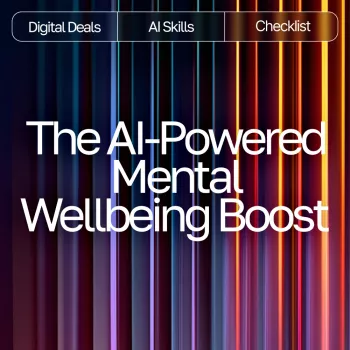
What’s included in The AI-Powered Mental Wellbeing Boost Checklist (digital download)
If you want a ready-made structure, The AI-Powered Mental Wellbeing Boost Checklist (Digital Download) is designed to make daily self-care feel more concrete and repeatable.
A 7-day starter plan (mix-and-match checklist actions)
| Day | Body (5–10 min) | Mind (5–10 min) | Life (5–10 min) | Optional AI prompt |
|---|---|---|---|---|
| Day 1 | Drink water + 5-minute walk | Name 3 emotions + 1 need | Tidy one small area | “Suggest 3 tiny actions for a calm start based on low energy.” |
| Day 2 | Stretch shoulders/hips | Reframe one stressful thought | Send a supportive text | “Turn this worry into a balanced statement and one next step.” |
| Day 3 | Protein-forward snack | 2-minute breathing practice | Set one boundary for today | “Draft a polite boundary message in 2 sentences.” |
| Day 4 | Sunlight or fresh air break | List 3 wins (small is fine) | Plan tomorrow’s first task | “Create a 15-minute plan for my first task tomorrow.” |
| Day 5 | Screen break + posture reset | Identify one trigger pattern | Choose one enjoyable activity | “Help me spot a pattern from these notes and one experiment.” |
| Day 6 | Light movement (walk/dance) | Grounding: 5-4-3-2-1 senses | Connect with a person or pet | “Give me a 60-second grounding script.” |
| Day 7 | Wind-down routine | Weekly reflection: what helped? | Prep one helpful thing for Monday | “Summarize my week into 3 insights and 2 gentle goals.” |
Small add-ons that make the routine easier to maintain
- Carry essentials for quick resets: a hands-free bag can make it easier to take a walk, bring water, or keep a small notebook on you. Consider the Genuine Leather Lambskin Crossbody Handbag – Stylish, Soft & Versatile for everyday errands and short breaks.
- Build connection through play: if “connect with a pet” is one of your stabilizers, a simple activity can help you follow through. The Interactive Squeaky Dog Sniffing Toy can support a quick, engaging reset on low-energy days.
Safety, privacy, and when to seek extra support
FAQ
What do you get with the digital download checklist?
You get a structured, ready-to-use mental wellbeing checklist designed for daily self-care, mood clarity, and routine support. It’s instantly accessible and can be used digitally or printed for an offline daily workflow.
Can the checklist be used without AI tools?
Yes. It works as a standalone daily checklist with check-ins, small actions, and short reflections; AI is optional if you want extra help brainstorming coping steps, reframes, or quick planning.
Is an AI-supported checklist a replacement for therapy?
No. It can support habits and self-reflection, but it doesn’t replace professional mental health care; if symptoms feel severe, persistent, or urgent, seek support from a qualified clinician or local emergency resources.









Leave a comment