Irregular Beveled Mirror Wall Clock: Silent Roman Style
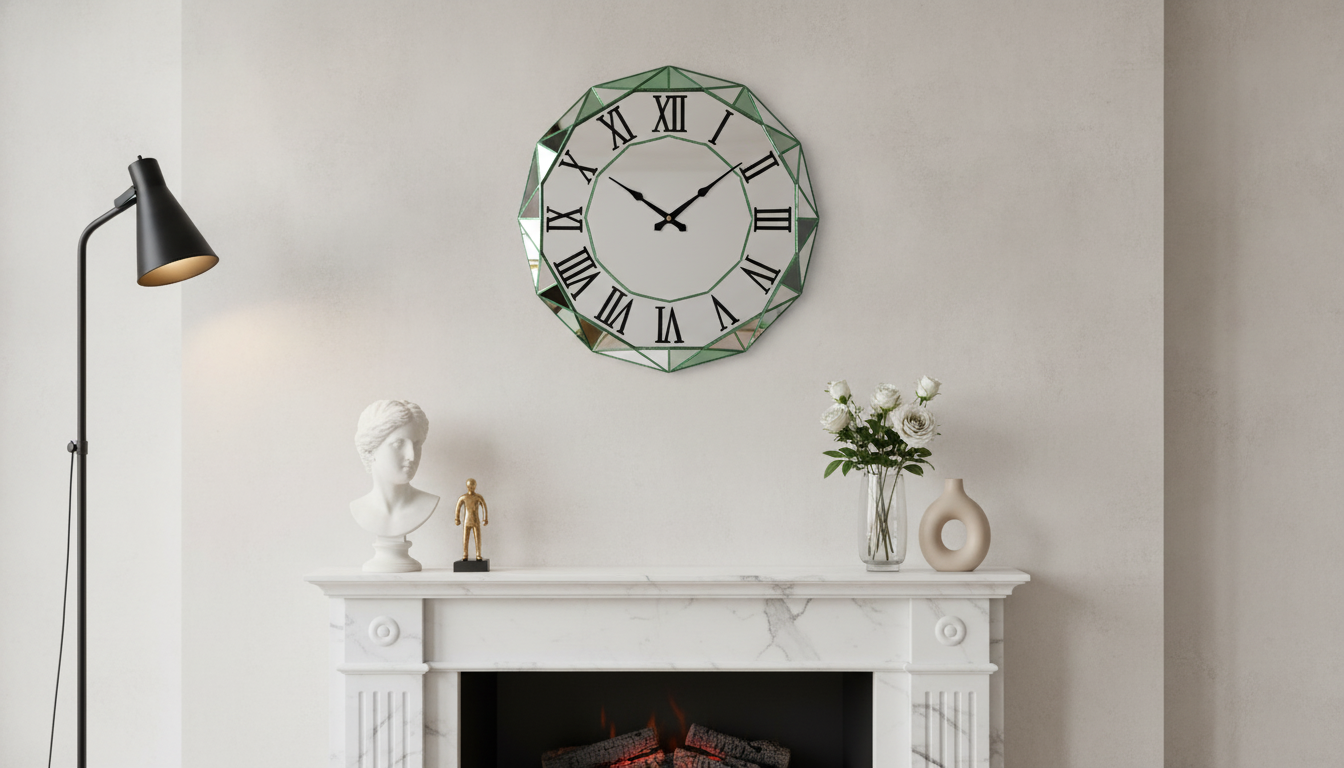
Irregular Beveled Mirror Wall Clock with Roman Numerals – Silent Quartz Movement
A wall clock can do more than keep time—it can shape the mood of a room. This irregular beveled mirror design pairs reflective depth with classic Roman numerals and a silent quartz movement for a calm, polished look in living rooms, bedrooms, entryways, and offices. The result is functional wall decor that feels a little like art: brightening dim corners, adding dimension to flat walls, and offering an easy time check without the distraction of ticking. For more guidance, see NAWCC Bulletin-MayJune-2025-web.indd.
What Makes This Clock Stand Out
- Irregular silhouette: The asymmetrical outline adds a sculptural, gallery-like presence that reads as intentional décor rather than a basic utility piece.
- Beveled mirror surface: The edge detailing catches light and creates subtle depth, so the clock looks different from morning to night as lighting shifts.
- Roman numerals: A timeless, decorative contrast to the modern mirrored finish, with roots in classic numbering systems (learn more about Roman numerals).
- Silent quartz movement: Designed for quiet spaces like bedrooms, nurseries, reading corners, and focused home offices. Quartz timekeeping is known for reliable accuracy (see: quartz clock).
Materials, Finish, and Visual Effect
The mirrored face helps bounce natural and artificial light, which can make smaller rooms feel brighter and more open—especially in hallways, apartment entryways, and compact living rooms. The beveled edge adds a prism-like highlight that shifts throughout the day, creating a soft “frame” effect without an actual frame. This makes the clock a strong candidate for walls that need a focal point but already have plenty of texture (paneling, wallpaper, or stone). For further reading, see Time Telling through the Ages.
Styling-wise, this clock plays well with metallic accents like brass, chrome, or matte black, and it’s equally at home in neutral palettes such as white, gray, and beige. It also works as a functional accent above consoles, mantels, or sideboards, or as a finishing touch in a hallway vignette with a tray, vase, and a small lamp.
Placement Ideas by Room
Entryway
Hang it above a slim console for an instant focal point and a quick time check on the way out. A mirrored clock also gives the entry a brighter, more welcoming feel—even if the space lacks windows.
Living Room
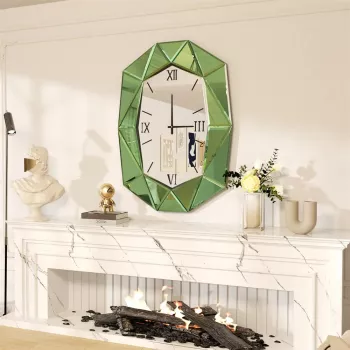
Try it near a mirror wall, a gallery arrangement, or above a mantel for layered reflection. Because the outline is irregular, it can soften a room filled with straight lines (rectangular frames, linear shelving, or a boxy media unit).
Bedroom
Position it opposite a window to amplify daylight, but avoid direct glare at eye level. If bedside calm is a priority, the silent movement helps keep the room restful—especially in quiet nighttime conditions.
Office
Place it behind the desk or on a side wall for understated style without audible distraction. The mirrored finish can brighten an office corner, but it’s best to avoid placing it where it reflects a monitor directly.
Dining Area
Center it on a main wall to anchor the room without competing with art. The Roman numerals add formality that pairs nicely with dining spaces, whether the style is modern, transitional, or glam-inspired.
Size, Readability, and Everyday Use
Roman numerals are decorative and classic, but readability depends on distance and mounting height. Before hanging, stand where people typically sit or pass through (sofa, bed, desk chair, kitchen doorway) and confirm the numerals are easy to scan. Because mirrored faces reflect light, it’s also smart to avoid strong direct sunlight or spotlights aimed at the face—glare can reduce visibility at certain times of day.
For the most polished look, align the clock with furniture centerlines when styling symmetrically (over a mantel or console). For a more artful approach, offset it slightly within a cluster of frames or mixed wall objects, letting the irregular outline break up uniform spacing. Finally, remember that even a silent clock benefits from stable mounting; a secure anchor helps prevent wobble and keeps the movement performing consistently.
Quick Buying Checklist
| Consideration | What to Look For | Practical Tip |
|---|---|---|
| Wall size | Enough open space for an irregular outline | Leave breathing room around edges so the shape reads clearly |
| Lighting | Balanced light without harsh hotspots | Test the wall at the same time of day the room is used most |
| Readability | Numerals visible from typical seating/standing points | Mark viewing spots (sofa, bed, desk) and check visibility before mounting |
| Quietness | Silent quartz movement for low-noise environments | Ideal for bedrooms; avoid loose hanging hardware that can rattle |
| Style match | Mirror + Roman numerals blend classic and contemporary | Pair with a few reflective accents rather than many competing mirrors |
Mounting and Care
A Thoughtful Gift for Home Upgrades
Product Snapshot
- Product: Irregular Beveled Mirror Wall Clock with Roman Numerals – Silent Quartz Movement
- Price: $204.32 USD
- Availability: In stock
- Best for: Statement wall styling, quiet rooms, reflective décor accents
More In-Stock Finds
- Genuine Leather Lambskin Crossbody Handbag – Stylish, Soft & Versatile
- Men’s Genuine Leather Belt – Vintage Western Style with Pin Buckle, 1 Inch Wide
FAQ
Is the movement truly silent?
“Silent quartz” typically means there’s no audible ticking in normal conditions. In extremely quiet rooms, faint sounds can sometimes come from loose mounting hardware or the clock shifting slightly, so secure anchoring helps.
Will a mirrored clock create glare?
It can if it’s placed where direct sunlight or strong spotlights hit the face. For the cleanest look, test the wall at the brightest time of day and adjust height or position to reduce hotspots.
How should it be cleaned without damaging the mirror edge?
Use a microfiber cloth and a gentle glass cleaner applied to the cloth rather than sprayed on the clock. Wipe carefully along the beveled edges and avoid abrasive pads that can scratch the mirror finish.








Leave a comment